Tuesday, September 13, 2011

A New and Improved Moore's Law

Researchers have, for the first time, shown that the energy efficiency of computers doubles roughly every 18 months.

The conclusion, backed up by six decades of data, mirrors Moore's law, the observation from Intel founder Gordon Moore that computer processing power doubles about every 18 months. But the power-consumption trend might have even greater relevance than Moore's law as battery-powered devices—phones, tablets, and sensors—proliferate.

"The idea is that at a fixed computing load, the amount of battery you need will fall by a factor of two every year and a half," says Jonathan Koomey, consulting professor of civil and environmental engineering at Stanford University and lead author of the study. More mobile computing and sensing applications become possible, Koomey says, as energy efficiency continues its steady improvement.

The research, conducted in collaboration with Intel and Microsoft, examined peak power consumption of electronic computing devices since the construction of the Electronic Numerical Integrator and Computer (ENIAC) in 1956. The first general purpose computer, the ENIAC was used to calculate artillery firing tables for the U.S. Army, and it could perform a few hundred calculations per second. It used vacuum tubes rather than transistors, took up 1,800 square feet, and consumed 150 kilowatts of power.

Even before the advent of discrete transistors, Koomey says, energy efficiency doubled every 18 months. "This is a fundamental characteristic of information technology that uses electrons for switching," he says. "It's not just a function of the components on a chip."

The sort of engineering considerations that go into improving computer performance—reducing component size, capacitance, and the communication time between them, among other things—also improves energy efficiency, Koomey says. The new research, coauthored by Stephen Berard of Microsoft, Marla Sanchez, at Carnegie Mellon University, and Henry Wong of Intel, was published in the July-September issue of IEEE Annals of the History of Computing.

In July, Koomey released a report that showed, among other findings, that the electricity used in data centers worldwide increased by about 56 percent from 2005 to 2010—a much lower rate than the doubling that was observed from 2000 to 2005.

While better energy efficiency played a part in this change, the total electricity used in data centers was less than the forecast for 2010 in part because fewer new servers were installed than expected due to technologies such as virtualization, which allowed existing systems to run more programs simultaneously. Koomey notes that data center computers rarely run at peak power. Most computers are, in fact, "terribly underutilized," he says.

The information technology world has gradually been shifting its focus from computing capabilities to better energy efficiency, especially as people become more accustomed to using smart phones, laptops, tablets, and other battery-powered devices.

Since the Intel Core microarchitecture was introduced in 2006, the company has experienced "a sea change in terms of focus on power consumption," says Lorie Wigle, general manager of the eco-technology program at Intel. "Historically, we have focused on performance and battery life, and increasingly, we're seeing those two things come together," she says.

"Everyone's familiar with Moore's law and the remarkable improvements in the power of computers, and that's obviously important," says Erik Brynjolfsson, professor of the Sloan School of Management at MIT. But people are paying more attention to the battery life of their electronics as well as how fast they can run. "I think that's more and more the dimension that matters to consumers," Brynjolfsson says. "And in a sense, 'Koomey's law,' this trend of power consumption, is beginning to eclipse Moore's law for what matters to consumers in a lot of applications."

To Koomey, the most interesting aspect of the trend is thinking about the possibilities for computing. The theoretical limits are still so far away, he says. In 1985, the physicist Richard Feynman analyzed the electricity needs for computers and estimated that efficiency could theoretically improve by a factor of 100 billion before it hit a limit, excluding new technologies such as quantum computing. Since then, efficiency improvements have been about 40,000. "There's so far to go," says Koomey. "It's only limited by our cleverness, not the physics." (Technologyreview)

Apps for What Ails You

Could a mobile app save your life? Aza Raskin thinks so. Formerly in charge of design and user experience for Mozilla's Firefox Web browser, Raskin left the company last year to start Massive Health, a startup based in San Francisco that's pursuing secretive plans to launch a mobile health app later this year.

While Angry Birds and other addictive games may top the app charts today, Raskin is among a growing number of entrepreneurs who think that apps will be powerful tools for health care, too. (See six mobile health apps highlighted by Technology Review.) That is because mobile apps offer the sort of intimate interactions the health-care system doesn't: they are always connected, always by your side, and they can have a very personal feel.

"Health really happens in between doctor's visits," says Raskin, who at 27 is already an influential thinker on design and user experience in Silicon Valley. "We now have these always-on connections, rich interfaces, mobile devices, and people who are willing to share," he says. "All that creates a substrate on top of which you can create designs and interfaces to change behavior."

The market for smart-phone health apps is only a few years old, and market analyst IDC says that this year some 14 percent of adult Americans will use one. According to Nielsen, which tracks 5,000 smart-phone users in the United States, the most popular health app today on the Android phone is WebMD, a source for consumer medical news. It is followed by Instant Heart Rate, a 99-cent app that permits people to use their phone's camera to measure their pulse. In third place is Epocrates, a free quick-reference guide to prescriptions.

However, Raskin thinks that health apps have yet to reach the people who really need them. Most existing apps, such as those that track sleep or workouts, are what he calls "wellness" tools that attract people who already take a close interest in optimizing their health, rather than not-so-healthy people who must manage chronic diseases.

Raskin isn't ready to detail his own company's plans—Massive Health's app will remain under wraps until it is launched late this year—but he says he is taking on the challenge of helping just that population. The idea is to make health care a constant in people's lives, not something that occurs only during a checkup.

Using apps to encourage healthy behaviors could be particularly valuable as the population ages and more people develop chronic conditions that require active management, such as diabetes. By 2020, according to health insurer UnitedHealth, 52 percent of adult Americans will be diabetic or pre-diabetic. "That's terrifying, and our current health care system is not ready for that," says Raskin. Mobile apps could prompt or remind diabetics to manage their blood sugar and diets better and, in Raskin's words, become a sort of "computer interface to our bodies."

The prospect of hundreds of millions more people living with such diseases explains why, after helping create a browser used by half a billion people, Raskin decided that health technology was the next big user-design challenge. "What needs the most help? It's not social photo sharing, it's health," he says. "The U.S. has a growing problem with chronic health conditions, and the costs of managing them are going up. We need new tools to address that." (Technologyreview)

Monday, September 12, 2011

ITT-Tech

ITT Technical Institute (often shortened to ITT Tech or ITTTI) is a for-profit technical institute with over 130 campuses in 37 states of the United States.[4] ITT Tech is owned and operated by ITT Educational Services, Inc. (NYSE: ESI), a publicly traded company. ITT Educational Services, Inc. (ESI) was spun off by ITT Corporation through an initial public offering (IPO) in 1994,

with parent company ITT as an 83% shareholder.[5] ITT Tech licenses the "ITT" name from ITT Corporation, which originates from the latter company's original name "International Telephone & Telegraph".

Company history
The company was founded in 1946 as Educational Services, Inc. and has been headquartered in Carmel, Indiana, since 1969. From 1965 until its IPO in 1994, ITT Tech was a wholly owned subsidiary of ITT Corporation (as "ITT/ESI"). By 1999, ITT Corp. (which had merged with Starwood the year before) divested itself completely of ITT Tech's shares but the schools still use the "ITT" name under license.[6] It operates over 130 ITT Technical Institutes in 37 states which primarily provide career-focused degree programs to approximately 80,000 students.

Academic services
ITT Tech offers AAS, bachelor's BAS, and master's (business-only, online) degrees. ITT Tech is nationally accredited by the Accrediting Council for Independent Colleges and Schools.[7] It may be impossible to transfer from ITT to a traditional university; per the ITT website, "it is unlikely that any credits earned at an ITT Technical Institute will be transferable to or accepted by any institution other than an ITT Technical Institute."[8]

Controversies
A two-year associate's degree at ITT Tech (which requires 96 credit hours, 12 credits per quarter, 3 classes every quarter, and 4 credits per class) costs approximately $47,328 and that cost comes out to $493.00 per credit hour. Out of concern that students at ITT Tech and other for-profit Technical Institutes are taking on unsustainable levels of debt, the Department of Education implemented new regulations that restricts students at for-profit Technical Institutes from taking out more debt than their future employment prospects would justify.[9]

ITT Technical Institute has been involved in several controversies over its business and academic practices, among them:

In August 1998, 15 former students alleged misrepresentation, fraud and concealment by ITT arising out of their recruitment and education at ITT campuses. In September 1998, ITT settled all of the claims of the 15 claimants.[10]

On February 25, 2004, federal agents raided the company's headquarters and 10 of its campuses.[11] The investigation negatively affected the company's stock and triggered several class action lawsuits by investors.

In October 2005, ITT agreed to pay $730,000 to settle a lawsuit with California in which employees alleged that it inflated students’ grade point averages so they qualified for more financial aid from the State of California.

An investigation by WGBA-TV (NBC26, Green Bay, WI) found evidence of widespread grade inflation. In one instance, a student got 100% on a computer forensics assignment by emailing the professor a noodle recipe. The station believes this to be a way to increase federal student aid funding.

In early March of 2011 WTMJ-TV (NBC4, Milwaukee, WI) ran an investigation finding teachers lying on attendance records so they could get cash bonuses paid by ITT Tech. ITT Tech uses an attendance policy as part of a requirement to get financial aid to show student progress. (Wikipedia.org)

Saturday, September 10, 2011

Internet VCs Circle Health Care

Some prominent venture capitalists are betting that the Internet strategies that created giants such as eBay and PayPal could reshape the ailing U.S. health-care system. That system currently devours 18 percent of the world's largest GDP while delivering mediocre health results.

In August, the online health marketplace ZocDoc, which lets patients look up doctors by specialty and zip code and make appointments over the Internet, raised $50 million from the investment fund of Russian billionaire Yuri Milner, who in the past has backed companies like Facebook, Twitter, and Groupon.

The idea behind ZocDoc and other startups getting funding is that our costly, paper-based health-care system is ripe for the same technological fixes—such as data visualization, cloud computing, and mass-market self-service concepts—that have transformed industries such as consumer banking and travel.

However, many venture investors say that investing in health-care IT (HIT) isn't as easy as putting money behind, say, the latest social-media company. Health care is more complicated, more regionalized, and subject to more government rules. The U.S. Food and Drug Administration surprised many software entrepreneurs this summer when it said it planned to regulate some health software apps for phones.

"A lot of venture capitalists say they are investing in HIT, but right now, there seems to be more education going on than investing," says Rebecca Lynn, a partner at Morgenthaler Ventures, based in Menlo Park, California.

According to Dow Jones VentureSource, venture investments in HIT rose about 20 percent in 2010, to $460 million, or about a fifth of the $2.3 billion that venture capitalists invested in all health companies, including biotech firms.

Jessica Canning, research director for VentureSource, says half the deals counted in 2010 were seed-stage or first-round financings. She called that "very promising at a time when VCs are struggling to keep their existing portfolios alive. It means a pipeline is being built in HIT."

Even so, many entrepreneurs are running into difficulty finding investors who understand both the heavily regulated health-care industry and software innovation, says Sonny Vu, cofounder of Agamatrix, which manufactures a diabetes monitor for the iPhone. "On the one hand, you have people raising money who know nothing about regulation or reimbursement codes; on the other, a bunch of health-care guys who think Zynga is some kind of fruit. There is truly a chasm between world views."

Some investors also question whether the venture capital model of plowing money into risky early-stage companies will pay off in HIT. "Relatively few VCs have sufficient depth of expertise with both the health system and IT," says Barbara Lubash, a managing director at Versant Ventures, also in Menlo Park. "But the usual reason HIT doesn't get funded is because the opportunities aren't large enough."

One reason is that most large hospitals have already sunk hundreds of millions of dollars into legacy IT systems built in-house or developed by dominant players such as Siemens, or Midwestern companies like Cerner or Epic, and are unlikely to move to new offerings. As a result, many entrepreneurs are looking for underserved niches in HIT, such as health apps meant to run on mobile devices. But those kind of inventions have limited appeal for professional investors, says Lubash: "We look for opportunities that are reasonably large, capital-efficient to pursue, and positioned to achieve sustainable competitive advantage. There aren't a lot of those models in HIT."

Some of the most aggressive investing in HIT is being done by specialized funds outside of Silicon Valley run by people with medical backgrounds. Among them is Santé Ventures, based in Austin, Texas. "I truly believe if you start with a massive pain point and provide a real-life solution, you'll be successful" as an investor, says Santé cofounder Joe Cunningham, who was formerly chief medical officer for the Providence Health System, part of Ascension Health, the country's largest nonprofit health provider.

One Santé investment is Rise Health, a startup that runs call centers where doctors and nurses with electronic medical records triage patients, treating some "virtually" while ensuring that others get basic care. Rise is targeting health systems that both insure patients and provide their health care, such as Kaiser Permanente, with promises to limit costs while improving patient care.

Other startups have been receiving investments from large IT companies who see health care as an important new market. In 2010, both Intel and mobile chipset maker Qualcomm participated in an $11 million funding round for Sotera Wireless, a San Diego company developing a wrist-watch-sized version of the wall-mounted medical monitors common in hospital rooms.

For Qualcomm, the investment was a bet on the growth of remote monitoring—the idea that people can use mobile devices to continuously monitor their well-being while at home, says Nagraj Kashyap, vice president of Qualcomm Ventures, a $500 million in-house venture fund established in 2000. While the remote monitoring market might take a decade or more to develop, Qualcomm doesn't face as much pressure as typical VC funds do to cash in on investments, Kashyap says: "We can take the long view and be patient. Our goal is to make sure that wireless technology gets embedded in health care."

Other investors believe HIT is now poised to explode. Among them is Robert Kocher, a former partner at consulting firm McKinsey & Company and one of the architects of President Obama's health-reform bill. This May Kocher signed on as an investor with venture capital firm Venrock Partners, in Palo Alto, California.

Kocher, who calls himself "wildly optimistic about the potential for positive change in the health-care system," believes changes will be largely driven by data.

Health-care reform legislation and other recent federal policies, Kocher says, are beginning to make a huge amount of medical data available for free to anyone who thinks they can use it. In 2012, for instance, the federal Medicare program plans to open its massive trove of claims and billing data. The impact of having more information on prices, drug use, and health outcomes is "game-changing and underappreciated," Kocher believes.

Venrock is investing in companies trying to leverage such data to help consumers and employers make rational health-care choices. For instance, Venrock is a backer of Castlight Health, a startup that offers Internet-based tools to help consumers compare prices offered for medical procedures using information it has culled from paper insurance forms.

Kocher thinks a transparency on medical pricing and results could have a big effect on health care. "Data is what creates functional markets. It lets suppliers differentiate offerings, and [buyers] understand relative trade-offs," he says. "The problem we've had in the medical system is that money has been made without value creation. That is finally at the point of changing." (Technologyreview)

What It Takes to Power Google

Google is the first major Web company to reveal exactly how much energy it uses—information that will help researchers and policy makers understand how the massive explosion of Internet usage and cloud computing is contributing to global energy consumption.

Google uses 260 million watts continuously across the globe, the company reported on Wednesday. This is equivalent to the power used by all the homes in Richmond, Virginia, or Irvine, California (around 200,000 homes), and roughly a quarter of the output of a standard nuclear power plant.

By far, the majority of Google's energy use is tied up in its data storage centers, according to Jonathan Koomey, a professor at Stanford University and a researcher who focuses on energy and IT. He says that roughly 220 million of those watts are used solely by the company's data centers, based on figures Google showed him. Most of this energy is used in cooling data center systems. Google custom builds many data centers, such as a new one in Finland that uses a seawater cooling system, to cut down on electricity.

This has enabled Google to be relatively energy efficient, says Koomey, who estimates that the company owns about 3 percent of servers worldwide and uses only 1 percent of electricity for data centers worldwide. "They're operating more efficiently than other data centers," he says.

Other Web giants, including Amazon and Facebook, probably operate their data centers with similar efficiency due to hardware and software customization, and innovative cooling equipment, Koomey says. However, the majority of data center power use comes from non-IT companies running their own data centers less efficiently.

In its report, Google compares the energy usage of companies' in-house computer systems to the energy used by its cloud servers. It estimates that running Gmail instead of an in-house e-mail system can be almost 80 times more energy efficient. Google says that 25 percent of its energy was supplied by renewable fuels—such as from wind farms—in 2011, and plan to increase that to 30 percent this year.

Sherif Akoush, a researcher at the University of Cambridge who studies IT energy consumption, points out that Google could be even more energy efficient, and notes that the company's environmental footprint will continue to rise. "Google tackles this problem mainly by using power purchase agreements from green sources, which offset basically the emissions from its data centers," says Akoush. Instead, "it should just try to implement more radical solutions like green energy and be a zero-carbon company instead of pumping waste then trying to clean it up."

Bruce Nordman, a researcher at the Lawrence Berkeley National Laboratory, notes that most IT-related energy usage occurs from homes and offices, and not major data centers.

Google says that an average search uses .3 watt-hours of electricity. But Nordman points out that cutting back on Google searches is not going to save a significant amount of energy. "Something like having your display go to sleep a little faster would probably save more energy," he says.

He adds, "since there's more consumption [in homes and offices], there's potentially more savings and yet that's not what gets the attention." (Technologyreview)

Thursday, September 8, 2011

New TV - LG Pentouch Plasma TV

News from US - New Televison : LG Pentouch Plasma TV. LG Electronics in the US has launching the LG PenTouch Plasma television that lets public use a special touch-sensitive stylus pen to interact with the Internet and to modify, control and create a variety of content directly on the screen.


New TV - LG Pentouch Plasma TV now on sale in The US

The line of televisions, first demonstrated at CES, includes a fifty inch model which will sell for $1,100, and two sixty inch models which will sell for $1,700 and $2,200 USD respectively. The set also requires a Windows PC (not included) for the touch interactivity.

“Touch displays have become the norm in mobile phones and tablets, but remain almost unheard of in TVs,” said Jay Vandenbree, SVP at LG Electronics USA. “The PenTouch TV brings all the excitement of touch displays, computers and the Internet to the world of television, with functions and programs that are great fun and really educational.”

Users activate the PenTouch mode with a click on the remote control. In PenTouch mode, users can access files created on their PCs, and work on them, edit them or move them around the screen using the stylus. The TV supports simultaneous two-pen use, and pen batteries can be recharged through USB ports on the TV or PC.

The HDTV’s uses a protective scratch-resistant glass screen, while auto sharpness control and color materialization technology enhance viewing. Complementing the unit’s TruSlim Frame design, the LG PenTouch TV incorporates a stand that has been specially designed to provide more stability when owners or their children are using the PenTouch feature.

Other Support of LG Pentouch Plasma TV:
Recommended PC system requirements to support the LG PenTouch TV include: Dual-core 2GHz or better CPU; 1GB or more of memory, 500MB or more HDD, graphics card with 1920×1080 (for PZ850 series) or 1024×768 (for PV490 series) connected via an RGB or HDMI output port. The Windows 7 (32 or 64 bit) operating system is recommended due to its support of multi-touch applications.

The 50-inch 50PV490 Full HD 1080p display will sell for $1,100, the 60-inch 60PV490 Full HD 1080p display will sell for $1,700 and the 60-inch 60PZ850 Full HD 1080p display with THX 3D and 2D Display Certification will sell for $2,200. (Jumper99)

Wednesday, September 7, 2011

Car-to-Car Communication System to Get a Massive Road Test

Technology that would allow cars to talk to each other—to help prevent accidents and improve traffic flow—is about to get a real-world road test following new funding from the U.S. Department of Transportation.

Many high-end cars already come with sensors capable of spotting a vehicle in a driver's blind spot, or warning that the car is drifting out of lane. However, these technologies, which use radar, laser, or video sensors, have a limited view. Car-to-car communications could provide even more sophisticated earlier warnings—for example, when a car several vehicles ahead brakes suddenly.

Last month, the DOT awarded $14.9 million to the University of Michigan's Transportation Research Institute to test the technology, known as vehicle-to-vehicle and vehicle-to-infrastructure communication. The system to be tested relies on dedicated short-range radio communication to allow cars to signal one another and receive messages from traffic equipment.

The DOT estimates that 80 percent of serious crashes could be addressed by this technology. "This is the next major safety advancement, one that's comparable to seat belts, air bags, and electronic stability control," said Scott Belcher, president and CEO of the Intelligent Transportation Society of America, a nonprofit founded to promote advanced car technologies.

The technology will be tested in a variety of situations; it will alert the driver when it is unsafe to pass, and when someone is approaching an intersection at a speed that could cause a collision. Each car will be equipped with a radio that signals its speed and direction of travel, as determined by GPS, to other cars. It will also send this information to suitably equipped traffic equipment.

The University of Michigan is partnering with eight automakers, a number of which began working collaboratively to develop a uniform platform for implementing the technology in 1995. These carmakers will provide 64 cars equipped with the radios, while an additional group of ordinary cars will be fit with devices so they can transmit signals, making up a total of roughly 3,000 vehicles. Drivers will be recruited from among the 20,000 employees of the university's medical center.

Peter Sweatman, director of the Transportation Research Institute, says Ann Arbor is an ideal test bed, since it's a concentrated area with only three central thoroughfares out of the city, making it likely that the equipped cars will regularly encounter each other. The driving portion will run for a year, and data will be collected and may be used by the DOT's National Highway Safety Traffic Administration to decide, by 2013, if the technology has enough benefits to be approved. If approved, the technology would be rolled out over 10 years, Sweatman says.

"We believe this will happen in the near future," says Nady Boules, director of electric and controls integration research lab at General Motors.

Jim Keller, senior manager and engineer at Honda Research and Development, adds, "We see this technology as having huge potential in the future to affect safety."

The DOT's Research and Innovative Technology Administration, which is overseeing the program, released the following statement on the project: "This technology has the potential to be a game changer for safety. Research from NHTSA found that combined, vehicle-to-vehicle and vehicle -to-infrastructure technologies have the potential to address about 80 percent of all unimpaired car crash scenarios."

Joe Stinnett, a research engineer in active safety for Ford, is similarly enthusiastic. He says that, in addition to preventing common accidents, the technology could prevent traffic backups by keeping cars in step with one another. But he says one key area that needs to be addressed is security. "People could hack into the system, sitting on a bridge with their laptop transmitting false information," he warns. So a major challenge will be ensuring that the network is secure and that misbehaviors can be identified, he says.

Europe is on a similar track. In January 2011, the European Commission launched a three-year pan-European field test in seven sites across Europe to ensure the interoperability of the system. The effort includes 40 carmakers as well as suppliers, electronic manufacturers, and research institutes.

As vehicle-to-vehicle communication goes mainstream, it could even pave the way for fully autonomous driving. Google has been testing its own self-driving cars in California. So far those cars have logged 160,000 miles, but they rely on costly sensors. Vehicle-to-vehicle communication could allow for autonomous driving that's far less expensive, Belcher says. He expects that some autonomous driving features could appear in commercial fleets within five years. But he doubts that fully autonomous driving will take hold in the foreseeable future for one key reason: "Americans like to control their own cars," he says. (Technologyreview)

Tuesday, September 6, 2011

The Rise of Electronic Medicine

Last November 9 at 2 a.m., I received a phone call from a hospital in Southern California. "Your mother needs an emergency operation," said the voice on the line. "Your father had chest pain while at her bedside and both are in ICUs. We have no idea what medications they take, what allergies they have, or what problems they have been treated for. Can you help?"

This is medicine today. A sea of paper and fax machines, information silos, privacy barriers, and unconnected data. And yet, we know the public is ready for a better system. According to a 2010 Harris Poll, four in five Americans believe any doctor treating them should have instant access to their medical record online.

Today, we are moving quickly in this direction. In 2009, President Obama signed the HITECH act, creating a $27 billion stimulus package to accelerate health-care information technology in the United States. The law pays doctors to adopt electronic records, and penalizes those who don't. Fueling the change are data standards that make it easier to share health information, maturing software, rapid innovation linked to mobile computing, and policies to protect patient privacy. As a consequence of this perfect storm of incentives and disincentives, the next five years will see an unprecedented acceleration of electronic medicine in the U.S.

Other countries are moving along a similar path. Some wealthy nations with socialized medicine are far ahead; in the Netherlands, 98 percent of primary-care doctors already use electronic records. But most nations—including Japan and China—are just beginning to bring IT to bear on health care in a systematic way.

Will we solve the problem of runaway health costs? The health reimbursement system in the U.S. pays doctors and hospitals for how many treatments they provide, not how good that treatment is. In Massachusetts, for instance, I estimate that 15 percent of lab and radiology tests are redundant or unnecessary. Evidently, one man's redundancy is another man's country club membership.

An important aim of health-care reform is to change our broken incentive structure by instead paying doctors a yearly fee to keep patients healthy. For doctors to survive this reimbursement change, they will need to keep electronic health records, share data, apply telemedicine to monitor sick people at their homes, engage patients continuously, and integrate the latest treatment knowledge into their workflow. That's electronic medicine.

The transformation of the health-care industry to embrace the levels of automation typical of travel and financial services will not be easy. Health care has unique payment models, referral patterns, workforce expertise requirements, customer needs, and privacy regulations. For these reasons, the centerpiece of the HITECH Act is the concept of "Meaningful Use"—paying doctors and hospitals only after they have installed electronic records and shown that they are using them wisely as measured by specific goals. Starting this year, your doctor will need to keep a computerized list of your medications, problems, and allergies. By 2013, your doctor will need to be able to share these data among all your caregivers (with your permission). And by 2015, the hope is that the combination of electronic health records, data sharing, and novel technologies will enable your primary-care doctor to recommend best treatments based on the experience of tens of thousands of similar patients.

Here's my prediction for the major developments in the next five years:

Electronic Health Records in the Cloud
Doctors are great at diagnosing and treating disease. They are not good at server hosting, database administration, and implementing government data protection rules, nor do they want to pay for costly hardware and software. I believe the only way to rapidly implement electronic health records is via the cloud.

Cloud computing—storing data and programs in centralized servers rather than in the doctor's office—requires novel security engineering to resist malware, denial of service, and sophisticated hacker attacks that could jeopardize private health information. But they solve other problems, such as making it possible for complex software to be scaled up and maintained without any technical involvement in clinician offices.

In the near term, regulatory requirements will result in the rise of "private clouds" hosted by large hospitals and software vendors, but commercial cloud providers are likely to develop secure hosting, given the enormous business potential of hosting electronic records for the more than 500,000 physicians in the U.S. At Beth Israel Deaconess Medical Center in Boston, where I am chief information officer, I estimate that moving infrastructure and applications to my hospital's private cloud has reduced the cost of implementing electronic health records by half.

Modular Software Unleashes Innovation
Less expensive cloud-based software, combined with tablet computers, will unleash a wave of software innovation. Until very recently, innovation in medical IT has depended upon the development schedules of a few very large vendors who sell hospital systems with $100 million price tags. In the future, electronic health records will become increasingly modular, similar to the online app stores where consumers download games or programs for their phones. Imagine a cool new app that provides a dashboard for diabetics, showing their daily glucose readings and sounding an alert if they aren't managing their disease well. Doctors today must wait for their medical center's single monolithic vendor to develop such an app. In the near future, modular software will let doctors and patients tap the creativity of thousands of entrepreneurs.

Consumer computing hardware will accelerate the new innovation ecosystem and bring it to the patient bedside. Already, over 1,000 clinicians at my hospitals have purchased tablet computers like the iPad and Samsung Galaxy Tab, using their own funds. Although developed for general consumers, tablets are proving to be an ideal computing device for doctors, too: they weigh under a pound, have a battery life of 12 hours (or about one shift), can be dropped five feet without significant damage, and can be wiped down with disinfectant.

A Network of Networks
Many people believe that doctors continually share data electronically with one another to coordinate treatment, do research, or track disease outbreaks. The reality is that only a few hospitals and cities in the U.S. are able to securely exchange health records, and even fewer have economic reasons to do so. Over the next few years, however, new standards for secure e-mail of data between providers will be integrated into electronic health records. The use of the fax machine will wane and patients will expect that every time they see a new doctor, or visit a new hospital, their health record will follow them.

Will one giant database hold all our health records? Will a monolithic network link insurers, doctors, and patients? Given privacy concerns, that's unlikely. What we are seeing instead is that cities, states, and regions are developing regional data exchanges. Just as the Internet has many e-mail providers and many Internet service providers, a collection of private and public "Health Information Service Providers" will be able to exchange data among themselves, creating a nationwide health information network that is a federation of subnetworks.

Engaged, Connected, E-Patients
In my parents' generation, doctors were considered largely infallible, and the medical record was something owned and viewed only by clinicians. Today, with credible medical knowledge available on the Internet and electronic records allowing doctors and patients to view the same data, joint decision making is becoming more commonplace. Research shows that shared decision making between doctor and patient results in better outcomes. An engaged patient is also less likely to assert malpractice and sue.

New reimbursement models will pay clinicians to keep patients well rather than for ordering tests or performing procedures. Such an emphasis on early intervention will lead to the rise of home-connected devices such as electronic blood pressure cuffs, glucometers and bathroom scales that report data wirelessly to clinician offices and patients' personal health records. Teleconsultation in the home will become much more common. The pendulum is swinging. Fifty years ago, doctors made home visits and attempted to keep you well. Today, we have abbreviated office visits that result in prescriptions to treat disease. Home monitoring and telemedicine will return us to the bygone era of wellness.

Genomes Lead to Information Prescriptions
The first human genome was sequenced in 2003 at a cost of nearly $3 billion over a 10-year effort. Today, the full DNA code of an individual can be sequenced for under $10,000 in about a week. I was one of the first 10 people sequenced (via the Personal Genome Project) and can say there is still a wide gap between knowing one's DNA and acting upon it. For most people, DNA just doesn't yet tell us that much.

This situation will change sooner than many expect. Researchers are already investigating novel ways that people's genome data might be stored inside electronic health records and used to speed up diagnosis, for instance by predicting ahead of time the chance a person will develop diabetes. Treatments will be more effective, too, as your DNA is compared electronically to that of thousands, maybe millions, of other patients. Rather than just medication prescriptions, doctors will use your DNA to write "genomic information prescriptions" for personalized educational materials describing the risks, evidence, and likelihood that a treatment will work for you.

In my opinion, a golden age of electronic medicine is now dawning. And just in time. The U.S. currently expends 18 percent of its gross domestic product on health care, and that is hurting America's position in the world marketplace. Health-care IT can bend that cost curve by ensuring that patients receive the right care (not too little or too much) at the right time, and by improving quality, safety, and efficiency. While health care reform has proven controversial in Washington, the good news is that reform of health-care IT is universally embraced. With $27 billion in federal stimulus, an urgent need to change, and alignment among government, insurers, and providers, we'll create an electronic future for health care in our generation, not our children's.

John D. Halamka, M.D., M.S., is a professor of medicine at Harvard Medical School, chief information officer of Beth Israel Deaconess Medical Center, chairman of the New England Healthcare Exchange Network, and co-chair of the national HIT Standards Committee. (Technologyreview)

A Simpler Approach to Online Identity

Many people struggle to remember scores of passwords for different websites. They often have to reset an account or dig through years of e-mail to find stored log-in information. A common trick is to use the same password for lots of accounts, but this can be a security risk, potentially allowing many accounts to be hijacked at once.

Even as identity becomes increasingly important online, it is becoming more fragmented, with users signing up for ever more websites and services. Account Chooser, a new service launched by the OpenID Foundation, an organization that includes the major websites Google, Facebook, Microsoft, and Yahoo, is the latest effort to solve this problem. Instead of having to create yet another account, Account Chooser lets users choose one account—their Gmail or Facebook log-in, for example—and then use it to log in to many other sites. The technology was developed by Eric Sachs, a Google project manager and OpenID Foundation board member. Google is backing the project by hosting the code.

Account Chooser is far from the first effort to create a single account that can be used on lots of websites. But previous endeavors, including the one launched by OpenID, have proven complicated to use. Previously, users had to create an OpenID account, and then manually link it with all of his or her other accounts, which meant figuring out which sites would accept the consolidated account as verification. A number of companies, including ClaimID and Verisign, are trying to tackle the issue with their own unified account technology, but they have so far seen limited acceptance from users and websites.

Chris Messina, developer advocate at Google, says OpenID is trying to create a system that users can easily understand, and companies can easily support. "The lack of a novice-friendly solution to authentication on the Web is one of the OpenID Foundation's greatest opportunities," he says.

Account Chooser lets users select any account managed by a company that has chosen to support Account Chooser, and then link that account to whichever websites they choose. It has already been implemented as the log-in page at Flickr, which now lets users access the site using not only a Yahoo account (Yahoo is Flickr's parent company), but also a Facebook or Gmail account.

Kaliya Hamlin, an independent industry expert who is a founder of the Internet Identity Workshop, feels that identity consolidation is very important. "This should be an aspect that most people shouldn't have to be aware of. It should just work," she says. Hamlin believes that the Account Chooser system is the clearest way for users to understand and control how their identities are being verified.

Don Thibeau, executive director of the OpenID Foundation, says the code behind Account Chooser was released under an open source license (meaning it can be reused and modified without charge) so that Web developers can implement it more easily, and can offer users a free choice of identity provider to use with the system. Account Chooser will also support a variety of standards used for identity verification, such as OAuth, SAML, and OpenIDConnect.

Mozilla, which makes the popular Firefox Web browser, has a developed a similar approach, with a system called BrowserID. After verifying that a user owns an e-mail address, BrowserID downloads a browser add-on that can be used to identify the user to sites that support the system. Ben Adida, technical lead for identity at Mozilla, says this is more secure than Account Chooser because information flows through the user's browser, and because it "limits the flow of information to what is strictly necessary to let users log in."

However, both Account Chooser and BrowserID need to be widely adopted by website owners and companies in order to reach a broad audience of users. Sachs hopes that Account Chooser's connection with Google (which is hosting the open-sourced code through the Google Identity Toolkit) will inspire other companies to join in. The full list of participants has not yet been released, but Sachs says that, besides Google, it includes companies such as Microsoft and Wordpress, and ranges from big names to small startups.

Account Chooser will be officially announced, along with more details, at the upcoming OpenID Connect Tech Summit, which starts on September 12 at Microsoft's Research Campus in Mountain View, California. Sachs says that "many vendors will be announcing their participation in the project over the course of the summit." (Technologyreview)

Saturday, September 3, 2011

New Tool Keeps Censors in the Dark

A new approach to overcoming state-level Internet censorship relies, ironically enough, on a technique that security experts have frequently associated with government surveillance.

Current anti-censorship technologies, including the services Tor and Dynaweb, direct connections to restricted websites through a network of encrypted proxy servers, with the aim of hiding who's visiting such sites from censors. But the censors are constantly searching for and blocking these proxies. A new scheme, called Telex, makes it harder for censors to block communications. It does this by taking traffic that's destined for restricted sites and disguising it as traffic meant for popular, uncensored sites. To do this, it employs the same method of analyzing packets of data that censors often use.

"To route around state-level Internet censorship, people have relied on proxy servers outside of the country doing the censorship," says J. Alex Halderman, assistant professor of electrical engineering and computer science at the University of Michigan. "The difficulty there is, you have to communicate to those people where the proxies are, and it's very hard to do that without also letting the government censors figure out where the proxies are."

The Telex system has two major components: "stations" at dozens of Internet service providers (ISPs)—the stations connect traffic from inside nations that censor to the rest of the Internet—and the Telex client software program that runs on the computers of people who want to avoid censorship.

To disguise the destination of the traffic the user wants to send, Telex employs a form of cryptography called "steganography," which is the practice of hiding secret messages within readable messages.

The Telex client software starts by making an outgoing connection to a nonblocked website, encrypting the traffic in the same way that an e-commerce or online banking site does (the address in the browser bar begins with https:// instead of http://). The identity of the censored site is then encoded in a special string, or "tag," that's embedded in the encrypted request. A Telex station at an ISP can examine incoming traffic and detect the presence of these tags, providing it has the right encryption key. The tag would be indistinguishable from random gibberish without the key.

When the Telex station detects an incoming request that includes a tag, it redirects that connection to the site specified in the encrypted message. This behavior resembles a controversial technology called "deep packet inspection" (DPI), which governments and ISPs have used for censorship and for blocking or throttling certain types of Internet traffic, such as peer-to-peer file-sharing.

"DPI has been used notoriously as a means of censorship, but Telex uses DPI in a completely different way," Halderman says. "We're basically turning the concept on its head to create something that's a really powerful anti-censorship tool."

Halderman says the design is such that it doesn't matter if the location of ISPs employing Telex stations are known to the censors. "The key thing is that we want to put the stations at enough points in the Internet so that blocking all the routes that go through those would be tantamount to making the Internet unavailable," he says. "The vision is that if we deploy Telex widely enough, it can make connecting to the Internet for a government that might want to do censorship an all-or-nothing proposition. Either you live with the fact that people can get to sites you want to censor, or you effectively pull the plug entirely."

In a paper on Telex submitted to the Usenix Security Symposium this month, Halderman and others describe in detail how their system would resist attacks by censors.

"We've gotten a lot of comment from people who don't understand the system, who are pointing out ways they believe the system could be defeated, but in almost every case, it's something we've thought about and addressed in the paper," he says, adding that the system was designed to adapt to increasingly sophisticated censorship methods.

"Censored users today have moderate success using normal proxy servers, but what we're seeing is that major countries involved in censorship are adapting quite quickly to that," Halderman says. "For example, China has gotten very effective in blocking Tor, and Iran has also made some quite sophisticated countermeasures against Tor."

Bruce Schneier, a cryptography expert and chief security technology officer at BT, calls Telex "well-thought-out and designed," but says the system would not work without widespread adoption by ISPs around the world.

"There are two ways to deploy this system: ask nicely, or make it a law [for ISPs to implement it]," Schneier says. "It would be great if the governments of the world backed this idea, because in general this sort of thing is why you don't see these technologies widely adopted. No one is willing to pay for them, and no one is going to support them otherwise."

The researchers are working to expand a test Telex network that they've been using for months to surf the Web, and even to watch YouTube videos. They note that the test system works with "acceptable stability and little noticeable performance degradation," and that it performed well in the face of some unexpected stress testing. A researcher accidentally misconfigured one of the Telex stations to act as an open Internet proxy; it wasn't long before the system was being used by outsiders hoping to hide their identities. (Technologyreview)

Quantum Processor Hooks Up with Quantum Memory

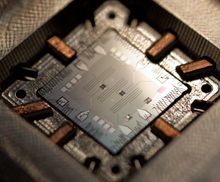
Researchers at the University of California, Santa Barbara, have become the first to combine a quantum processor with memory that can be used to store instructions and data. This achievement in quantum computing replicates a similar milestone in conventional computer design from the 1940s.

Although quantum computing is now mostly a research subject, it holds out the promise of computers far more capable than those we use today. The power of quantum computers comes from their version of the most basic unit of computing, the bit. In a conventional computer, a bit can represent either 1 or 0 at any time. Thanks to the quirks of quantum mechanics, the equivalent in a quantum computer, a qubit, can represent both values at once. When qubits in such a "superposition" state work together, they can operate on exponentially more data than the same number of regular bits. As a result, quantum computers should be able to defeat encryption that is unbreakable in practice today and perform highly complex simulations.

Linking a processor and memory elements brings such applications closer, because it should make it more practical to control and program a quantum computer can perform, says Matteo Mariantoni, who led the project, which is part of a wider program at UCSB headed by John Martinis and Andrew Cleland.

The design the researchers adopted is known as the von Neumann architecture—named after John von Neumann, who pioneered the idea of making computers that combine processor and memory. Before the first von Neumann designs were built in the late 1940s, computers could be reprogrammed only by physically reconfiguring them. "Every single computer we use in our everyday lives is based on the von Neumann architecture, and we have created the quantum mechanical equivalent," says Mariantoni.

The only quantum computing system available to buy—priced at $10 million—lacks memory and works like a pre-von Neumann computer.

Qubits can be made in a variety of ways, such as suspending ions or atoms in magnetic fields. The UCSB group used more conventional electrical circuits, albeit ones that must be cooled almost to absolute zero to make them superconducting and activate their quantum behavior. They can be fabricated by chip-making techniques used for conventional computers. Mariantoni says that using superconducting circuits allowed the team to place the qubits and memory elements close together on a single chip, which made possible the new von Neumann-inspired design.

The processor consists of two qubits linked by a quantum bus that enables them to communicate. Each is also connected to a memory element into which the qubit can save its current value for later use, serving the function of the RAM - for random access memory - of a conventional computer. The links between the qubits and the memory contain devices known as resonators, zigzagging circuits inside which a qubit's value can live on for a short time.

Mariantoni's group has used the new system to run an algorithm that is a kind of computational building block, called a Toffoli gate, which can be used to implement any conventional computer program. The team also used its design to perform a mathematical operation that underlies to the algorithm with which a quantum computer might crack complex data encryption.

David Schuster leads a group at the University of Chicago that also works on quantum computing, including superconducting circuits. He says that superconducting circuits have recently proved to be comparatively reliable. "One of the next big frontiers for these techniques now is scale," he says. By replicating the Von Neumann architecture the UCSB team have expanded that frontier.

That's not to say that quantum computers must all adopt that design, though, as conventional computers have. "You could make a computer completely out of qubits and it could do every kind of calculation," says Schuster. However there are advantages to making use of resonators like those that make up the new design's memory, he says. "Resonators are easier and more reliable to make than qubits and easier to control," says Schuster.

Mariantoni agrees. "We can easily scale the number of these unit cells," he says. "I believe that arrays of resonators will represent the future of quantum computing with integrated circuits." (Technologyreview)

Tuesday, August 30, 2011

About Annuity Loans

As a deferred annuity owner, you can receive momentary, tax-free access to your funds through annuity loans. In general, you can take as much as half of your annuity investments in a lump sum. Provided that you make the loan repayments on time, you can take advantage of non-taxed loan money.

The loan interest and payments are reimbursed back to your annuity account. Thus, if you delay making loan payments, or defaulted in the schedule, your loan will be considered as a withdrawal or distribution.

Did you know that in the United States, withdrawals on your annuity funds are subject to income tax? In addition, a penalty tax is incurred if you carried out the distribution and you’re still under 59.5 years of age. Because of this, it’s critical to get your annuity loan from a reputable company that can assist you under any circumstance.

Getting Your Annuity Loan
Having to get a loan is always a frustrating and difficult process. Luckily there are many reputable annuity companies that make obtaining an annuity loan online really simply. It’s just as easy as filling out an online for and waiting for the approval to come in.

The annuity company we recommend for a loan is from 101 Day Loans. They have a very simple 7 minute online application form. All it takes is 3 Steps to get the ball rolling: Applying Now, Getting Approved, and Getting Your Funds.

Annuity Loan Advantages
Insurance companies offer annuities. These firms establish the rate of interest as well as the terms and conditions for an annuity loan. Many insurance groups charge loan service fees and add them up to the rate of interest.

Loans on annuities are well-accepted and preferred over distributions for the annuity funds to become accessible. One of the significant advantages of getting loans instead of making withdrawals is that it can save you money on the supposed taxes on withdrawals. Distributions are promptly subject to penalty tax and income tax, when necessary.

You will normally be given up to five years to repay structured settlement loans. Some insurance companies offer extension on the repayment schedule for loans utilized to buy a primary residence. Such extended term of repayment is typically no more than twenty years.

Annuity Loan Disadvantages
Loans on annuities also come with disadvantages. If you fail to pay back the money on time, as stated above, the amount will be treated as a withdrawal. You are required to instantaneously pay the loan back, the outstanding rate of interest, the loan fees, as well as any due taxes. If you default on your repayment obligation, the interest rate will continue to accumulate on the current loan balance.

Annuities are made to create tax-deferred profits. These earnings are consequently paid out in installments to grant steady income during retirement. A loan against annuity will slow down your account earnings until the entire loaned amount is paid. Remember that any outstanding loan balance will not earn interest.

When the loan is never paid back in its entirety, you defeat the purpose of your annuity. Funds which are not returned to your account will no longer take part in the tax-deferred growth of your annuity. Unpaid loans have a profound, unconstructive impact on your account, essential to give you steady income during your retirement.

Any outstanding loan on annuity will also inhibit you from rolling over, or transferring your annuity to another insurance provider without fines or penalties. Fundamentally, you must keep your annuity active with your present insurance company until you repaid the entire loan amount. There are some insurance providers that will permit the transfer. If this is the case, your outstanding loan balance will be deemed as a withdrawal and get it taxed accordingly.

If you buy annuities as a component of your retirement account, the loans on your annuities come with added risk. Normally, if you leave your employer or you were terminated, you should pay your loan balance almost immediately.

Secondary Annuity Market
If you wish to get your hands to your annuity cash fast, there’s no way to go but to the secondary annuity market. This market will allow you to create liquidity on your asset instantly by granting you the opportunity to sell your annuity.

The price that would be matched against your annuity will depend on the following factors:
  • Total amount yet to be remunerated,
  • Term or time that the payout will be made,
  • Outstanding rate of interest, and
  • Financial strength of the annuity company

With the assistance of an annuity expert, you will receive a few bids on your annuity. Once you accepted one, you will get a check within a few weeks. You can then place the money in other investments that you deem to be more profitable.

Caution with Annuity Loans
Owning an annuity does not necessarily mean that you can procure annuity loans or you can always convert it to instant cash. Annuities which are maintained inside a tax-qualified retirement account and life-only immediate annuities are not eligible to be sold or at times loaned since the payments on these annuities are dependent on your life expectancy, thus they are not guaranteed.

Sources: qwoter.com

Monday, August 29, 2011

Mesothelioma Lawyer Texas - Texas Mesothelioma Attorneys

Mesothelioma Lawyer Texas – Texas Mesothelioma Attorneys
Texas is location to several major oil refineries, due to the state’s position as the key producer of petroleum products in the United States. Major companies who operate these entities include Exxon, Chevron, Shell, Mobile, and BP Amoco.

Asbestos Exposure and Mesothelioma in Texas
More than 50 cities within the state have had reported instances of asbestos exposure on job sites. More than 2,500 people in Texas have reportedly died as a result of exposure to the toxic mineral in the last two decades leading up to the 21st century, which is one of the highest numbers of asbestos related deaths during this time period in the country. Texas currently ranks in the top 10 for states having a high number of mesothelioma cases filed in courts in the United States.

Asbestos exposure in Texas has been largely associated with its prominent oil industry. Oil refineries are among the top at risk sites for exposure, due to the wide spread use of asbestos materials in construction of these facilities. Asbestos was once a staple in commercial construction because of its fire retardant properties, a characteristic welcomed by those in need of means to lessen fire hazards around items prone to explosion in high levels of heat such as oil.

Texas is also the location of some naturally occurring asbestos deposits, which were once mined for commercial use.

Texas Mesothelioma Attorneys
Mesothelioma lawyers in Texas have been effective legal advocates for workers who were exposed to asbestos on the job and subsequently diagnosed with a related disease like mesothelioma. Mesothelioma is a rare, but serious condition that affects the protective lining of the heart, lungs, and other areas of the body. There is no cure for the disease, but advancements have been made in treating life altering symptoms for the improvement of the quality of life of patients.

If one has been exposed to mesothelioma while on the job, or living near an area where fibers of the toxic mineral were released into the environment for an extended period of time, they may be entitled to compensation under the law.

Mesothelioma Lawyer Texas – If you or a loved one has been diagnosed with an asbestos related disease, and would like to learn more about your rights and legal options, an experienced mesothelioma lawyer in Texas can provide you with a free, no obligation consultation about your case.